
View by Country and Subject

Sunday, July 26, 2009

Made in Ghana

Antoinette Ablordey is one of the first artists to make batiks in Ghana and I was lucky enough to stay with her for the final two weeks of my Watson year.
Under her guidance, I learned how to make batiks the Ghanaian way, with blocks of Adinkra shaped stamps and "wax pens" cut out of foam. 
Sometimes the best things in life are free and I was pleasantly surprised to discover that such a simple tool as foam could be so effective for drawing with wax. These sponges don't drip like tjanting tools, hold more wax then brushes and have more qualitative line potential then metal coils. 
Here are a few of the wax stamps I cut out of foam. 
Antoinette merges tie-dye and batik in her t-shirts.
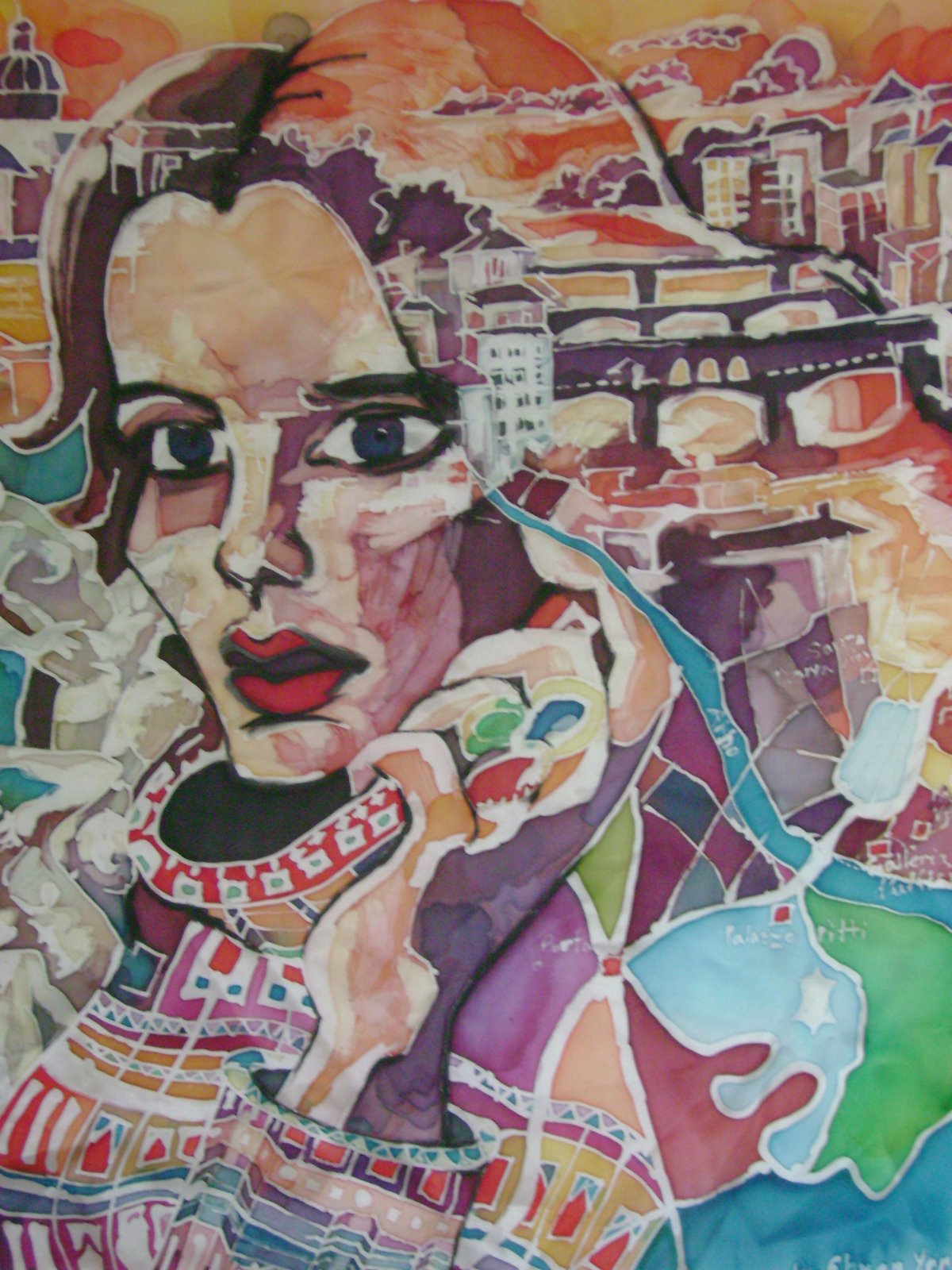
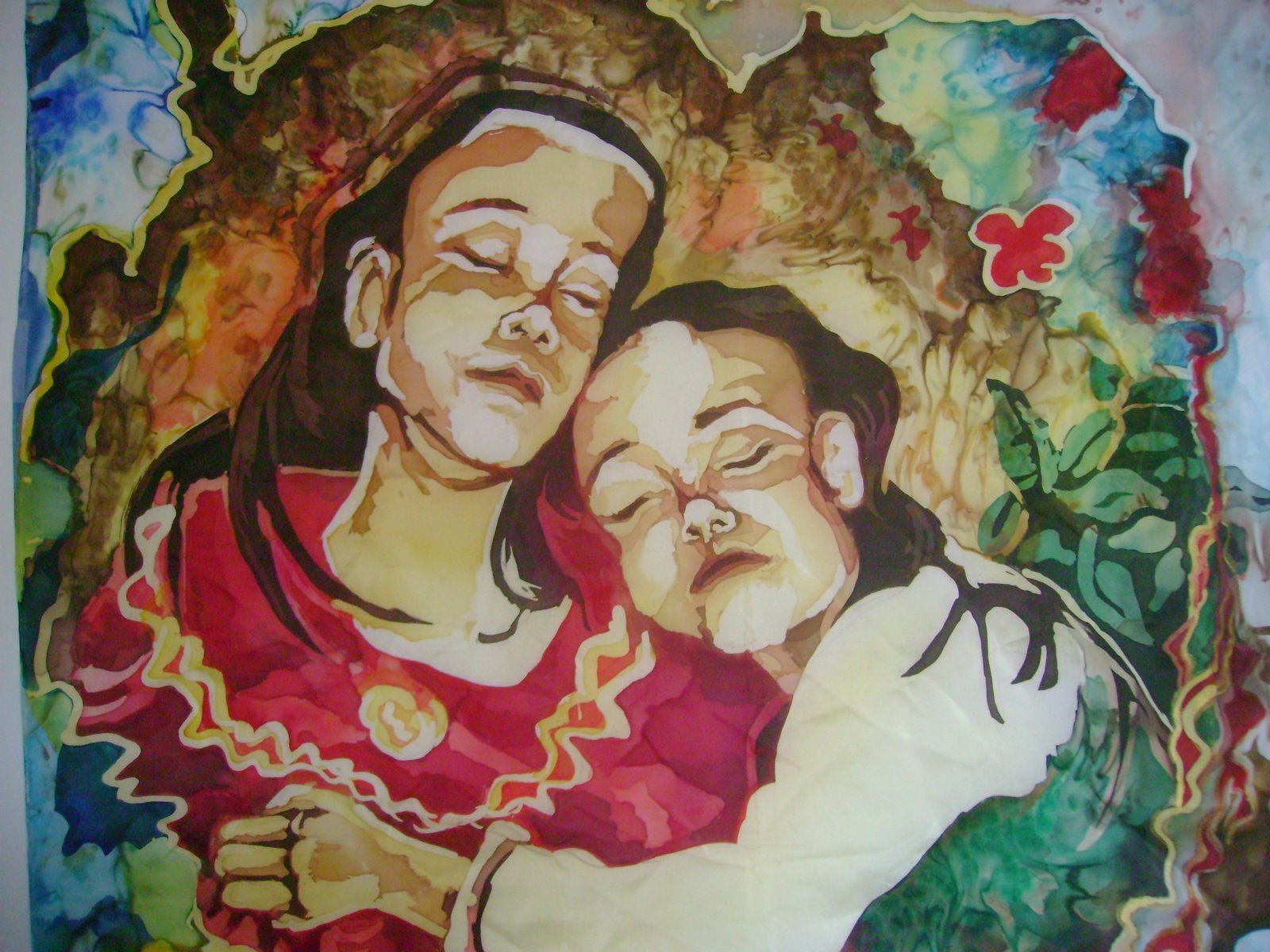
A few finished pieces:
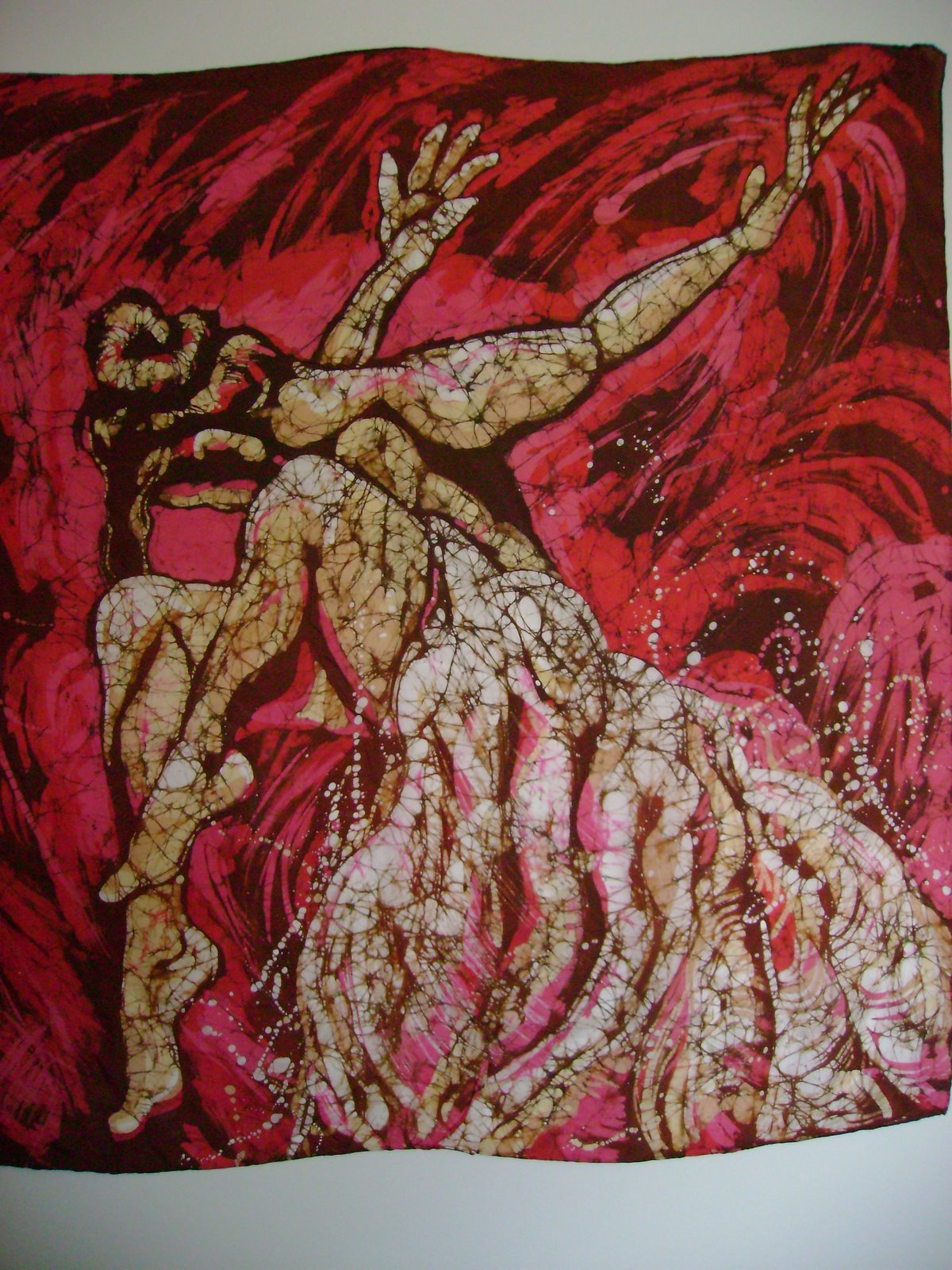
Ghanaians love to dance!

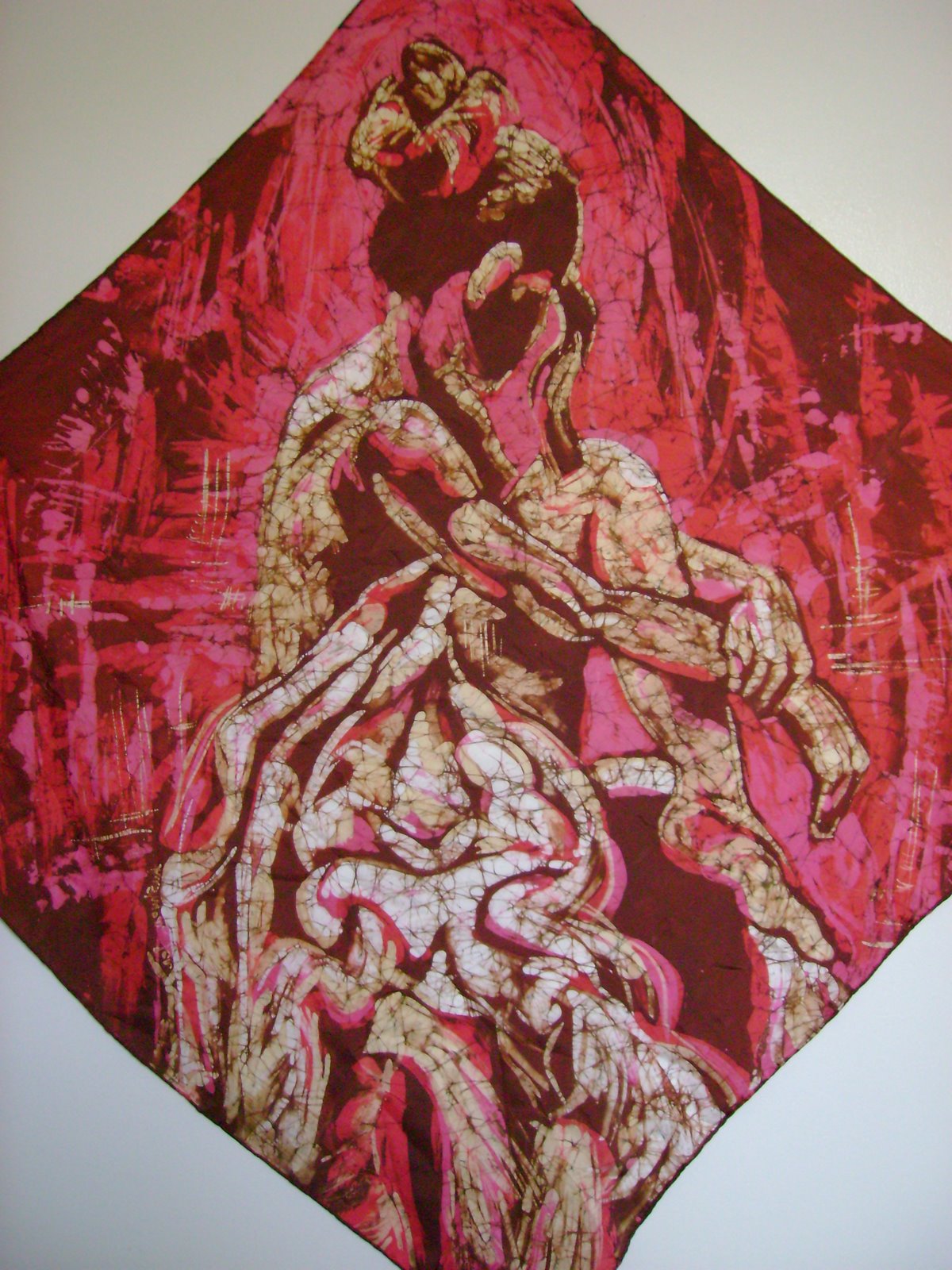
Below is a batik influenced by the Asante Akua'ba doll - one of the most traditional of African sculptures. Do you see the big round head and flat columnar body? Figures like this were carried by girls and women to promote their fertility and to ensure the beauty and health of their offspring. 
My final "farewell" batik to the Watson Fellowship with adinkra symbols that represent what I have gained from this year. The road was long and at times difficult -but with endurance, strength, independence, perseverance, wisdom, etc., I made it across the finish line. What an incredible journey it has been!


Friday, July 24, 2009

Batiks in Ghana

Batiks are everywhere in Ghana: 
 sold in markets

Displayed in art galleries
In department stores
As clothing worn by all

Saturday, July 18, 2009

Adinkra cloth


Batiks in Ghana are heavily influenced by Adinkra, the only African cloth printing tradition of pre-colonial origin.  According to Asante legend, it was introduced following the capture of a rival monarch by the name of Adinkra, who wore the cloth to express his sorrow on being taken to the Asante capital of Kumase. I thus followed his trail of tears to see for myself the birthplace of this Ghanaian textile.

            Traditional Adinkra cloth involves the printing of designs with a black dye made from the bark of the “Badie” tree using stamps carved from sections of calabash - the fruit of this tree. 

Since the ink is not fixed however, this fabric can only be worn for special occasions such as wedding, funerals and initiation rites.

 The adaptation of these same wooden stamps for the batik medium however, allowed the material to be dyed with colorfast dyes and opened the door for Adinkra symbols to be worn at anytime and for all occasions. 

Batiks in Ghana are thus filled with Adinkra symbols - each with their own name, meaning, proverb and story. 


Saturday, July 11, 2009

Dogon Country


After traveling the world for over a year, I can say without a doubt that Dogon Country deserves it’s place on the top-10-places-to-see-before-you-die list.

 I was and still am left speechless by the stunning landscape and the complex and elaborate culture of the Dogon people. There honestly are no words to do this place justice – you simply MUST see this world for yourself. It is worth every penny and all of the many drops of sweat lost.

 The Dogon take great pride in their gala (indigo) and bogolan fabric which incorporate the many symbols and designs of their culture. Most ubiquitous is the “Chiwara” an antelope that represents agricultural prowess  and the “Dogon” sign of two contrasting U’s for the earth/sky and a bar in the center for the Dogon people.

 Unlike in the big cities, no chemicals are involved in the traditional method and only recently have artisans begun to create “modern paintings’ using a bleach solution to make white.

 In Dogon, the ‘ngalama’ leaves which make the yellow dye is called ‘akashia’ and instead of dying the entire fabric with it, it is instead mixed with indigo and drawn only onto the places where the clay will be applied and then drawn again on top of the clay.

The layers of clay and dye are repeated as often as necessary to make a deep permanent black. A drawing in the negative with bleach to remove color is thus never utilized.

 The difference is obvious in the softer colors and more organic lines of the natural bogolan . If there is still any doubt just look on the back to make sure it is white and not pre-dyed.

 The bark of the ‘local wine tree’ is used to color the fabric reddish-brown and it’s berries can be eaten or made into juice. Delicious!

 Even the indigo is made only with the ashes of millet stalks. I can’t help but wonder how this is possible then the usual process requires both causic soda and hydrosulfite to make the blue truly colorfast. Maybe the Dogon really do have some sort of ancient magic!